
Laser pointer syndrome: what it is and how to prevent it in cats and dogs
Some pets become fixated on lights and shadows after lots of laser play. What laser pointer syndrome is, the signs to watch for, and how to keep laser games healthy.
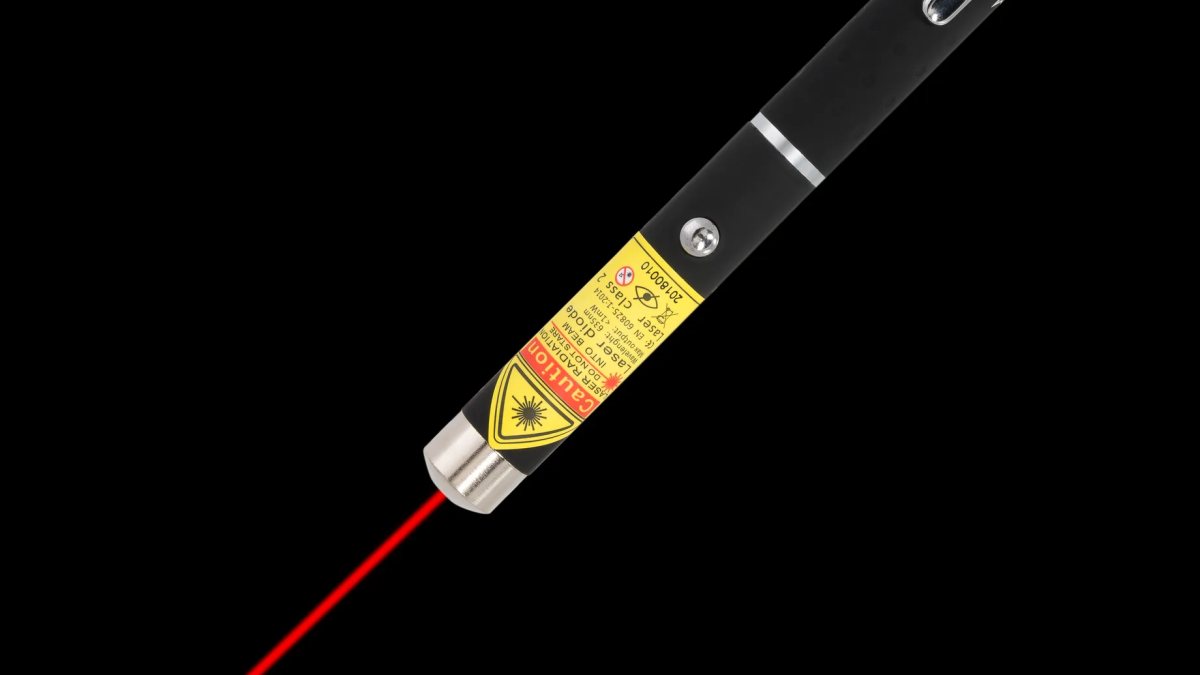
Search for laser pointer games on social media and you will find thousands of happy, bouncing cats. Look a little longer and you will also find worried owners: a dog that stares at the ceiling for hours, a cat that will not stop chasing reflections from a watch. The phrase that keeps coming up is laser pointer syndrome. In this article we explain what people mean by it, why it happens, which pets are most at risk, and – most importantly – how to keep laser play healthy.
We sell class 2 laser pointers, and many of our customers buy one to play with their cat. So we have a simple interest: we want those games to be good for your pet. That means being honest about the downsides too.
What is laser pointer syndrome?
Laser pointer syndrome is not an official veterinary diagnosis. It is an informal name used by owners, trainers and behaviourists for a pattern of obsessive light-chasing that some animals develop after repeated laser games. The pet becomes fixated on lights, reflections and shadows, and keeps hunting for them long after the game has ended – sometimes for hours, sometimes at the expense of eating, resting or playing normally.
Behaviour professionals often compare it to other compulsive behaviours, such as tail chasing or fly snapping. The common thread is a hunting sequence that starts but never finishes.
Why does it happen?
Predatory play has a natural sequence: search, stalk, chase, pounce, catch. Every step brings a little reward, but the real payoff comes at the end, when the animal gets something in its paws or mouth. A laser dot can be searched for, stalked, chased and pounced on – but never caught. The sequence stays open.
For many cats that is no big deal, especially if the game ends with a toy. But in some animals, the unfinished hunt seems to leave them wound up and searching for more. Repeat that day after day and the search can become a habit: every flicker of light becomes a possible "prey" that might reappear.
Cats or dogs: who is most at risk?
Most reports of laser pointer syndrome involve dogs, especially high-drive working and herding breeds that are bred to watch movement intently and to keep working. Terriers and some gundogs are also mentioned often. These dogs can switch into "work mode" and struggle to switch off again.
Cats seem to cope better on the whole – short bursts of chasing are what cats do naturally – but individual cats can still become frustrated or fixated, particularly indoor cats with few other outlets for hunting behaviour.
Signs to watch for
- Staring at walls, floors or ceilings where the dot used to be, long after the game has ended.
- Chasing reflections from watches, phone screens, glasses or sunlight through a window.
- Pouncing on or barking at shadows.
- Getting very excited – whining, trembling, pacing – when you pick up the laser or anything that looks like it.
- Losing interest in normal toys, food or walks.
- Difficulty settling down after play.
One of these on its own is not necessarily a problem; most cats look around for the dot for a moment afterwards. It is the combination, the intensity and the persistence that matters.
How to prevent laser pointer syndrome
1. Always finish the hunt
This is the golden rule. Lead the dot onto a real toy – a toy mouse, a feather wand, a kicker toy or a treat – then switch the laser off and let your pet pounce on something it can actually catch. The sequence is complete, and the game ends on a high.
2. Keep sessions short
A few minutes is enough for most cats. Stop while your pet is still keen rather than when it is exhausted and frantic.
3. Make the laser an occasional treat
Use the laser as one game among many, not the only game. Rotate with wand toys, puzzle feeders and good old cardboard boxes.
4. Keep the dot low and safe
Keep the dot on the floor and low on walls – never in your pet's eyes, and never on mirrors or glass where it can bounce. Our class 2 lasers have an output up to 1 mW, but that is no reason to be careless.
5. Be extra careful with dogs
For many dogs, especially herding breeds, the safest choice is simply not to use a laser at all. Fetch, tug, scent games and a flirt pole give them a proper "catch". We go into this more in laser pointers and dogs.
6. Store it out of sight
Put the laser away in a drawer after each game. That keeps it special for your cat and, just as importantly, out of reach of children – a laser pointer is not a toy.
What to do if your pet is already obsessed
If you recognise the signs, stop laser games completely for now. Remove obvious triggers where you can – reflective objects in sunny windows, for example. Give your pet plenty of other ways to hunt and work: food puzzles, sniffing games, play with toys it can catch. Many owners see improvement within weeks.
If the behaviour is severe, gets worse, or your pet is not eating or sleeping properly, talk to your vet. They can rule out medical causes and refer you to a qualified animal behaviourist who can set up a proper plan.
So should you use a laser pointer at all?
For most cats, yes – used with care, a laser pointer is a brilliant way to get an indoor cat moving. The secret is in the routine: short sessions, dot on the floor, never in the eyes, and always ending on a real toy. For dogs, we suggest caution and other games first.
If you are choosing a laser for your cat, see our guide to laser pointers for cats and dogs. A simple pen such as the M1 red laser pen or the X1 green laser pen is all you need. And for more on the question owners ask most, read are laser pointers bad for cats?
More articles
Blog
Are laser pointers bad for cats? How to play safely
Laser play can be great exercise for cats – or a source of frustration. What the risks really are, and a simpl…
Laser pointers and dogs: should your dog chase the dot?
Many dogs go wild for a laser dot – but for some, it becomes an obsession. When a laser pen for dogs is fine,…
How to use a laser pointer in a presentation (without distracting your audience)
A laser pen can make your slides easier to follow – or turn them into a light show. Practical tips for pointin…